Who Is Khadija Pozzo Di Borgo?
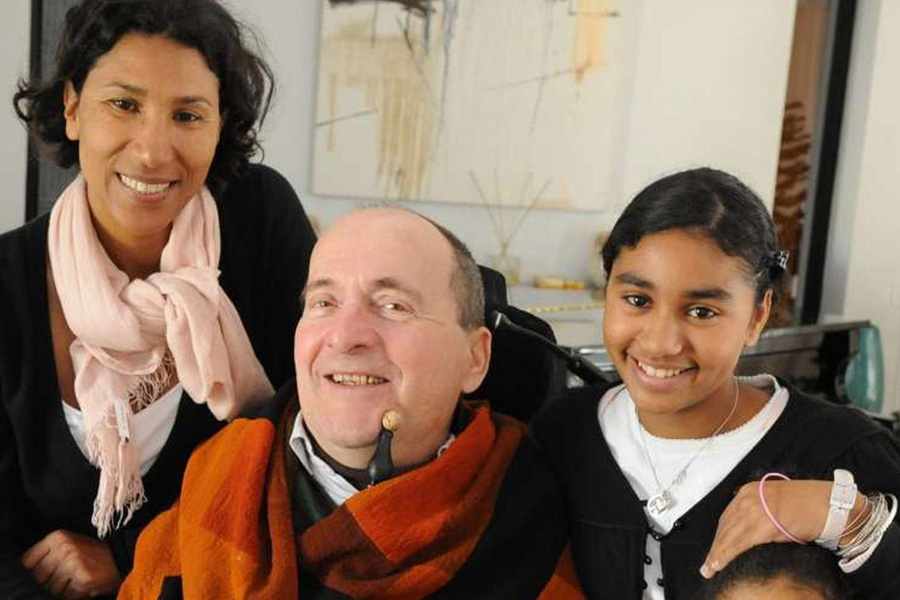
Khadija Pozzo Di Borgo, often spelled Khadidja, is a Moroccan lady who was the second wife of Philippe Pozzo di Borgo, a French businessman and author whose biography inspired the 2011 film The Intouchables. Khadija was mostly unknown whereas Philippe became famous for his disability, sadness, friendship, and tenacity. Her biography is told through their marriage, daughters, and Moroccan-French family life.
Khadija Najimi, or Najima, joined Philippe’s life after his tetraplegic paragliding accident and the loss of his first wife, Béatrice Roche. Their partnership marked a new beginning in a life that had appeared empty.
Khadija’s narrative shows Philippe’s calmer journey, which I find fascinating. His public image was conquering adversity, while his private life was about finding companionship, constructing a home, and being a father again. Even if her personal past is unknown, Khadija was part of that transformation.
Philippe Pozzo Di Borgo and His Life Before Khadija
Philippe Pozzo di Borgo was born on February 14, 1951, into a Corsican aristocratic family with a long historical heritage. He developed a successful business career, eventually becoming a director of the Pommery champagne house, associated with the LVMH luxury group.
His life changed dramatically on June 23, 1993, when a paragliding accident in the French Alps left him tetraplegic. The injury profoundly affected his physical independence and everyday existence. Activities that had once required little thought became dependent on assistance, equipment, and the patience of others.
At the time, Philippe was married to Béatrice Henriette Lucie Roche. Their relationship had begun decades earlier, and they had adopted two children after experiencing difficulties having children biologically.
Béatrice died of cancer on May 3, 1996, after a prolonged illness. Philippe was left confronting bereavement while already living with the consequences of his accident. His emotional struggles became severe, and his relationship with his caregiver, Abdel Yasmin Sellou, played an important role in his recovery.
Philippe eventually transformed these experiences into his memoir Le Second Souffle, published in 2001. The book later provided the foundation for The Intouchables, directed by Éric Toledano and Olivier Nakache and released in 2011.
Yet the story of Philippe’s life did not end with disability, grief, or the extraordinary friendship that made him famous. His meeting with Khadija opened another door.
How Khadija and Philippe Pozzo Di Borgo Met
Khadija and Philippe reportedly met in Morocco around 2003. Philippe had begun spending time in the country during the winter months because the climate offered relief from the neurological pain associated with his injury.
Morocco provided a different rhythm of life from France. Its milder coastal weather, familiar domestic routines, and distance from the demands of his earlier business career gave Philippe an opportunity to find comfort in a new environment.
During this period, he met Khadija, a Moroccan woman whose life before their encounter is not extensively documented. The precise circumstances of their first meeting are described inconsistently, with accounts referring to Morocco broadly and sometimes mentioning Marrakech.
What followed was a relationship that developed into a lasting partnership. Philippe, who had experienced profound loss, found companionship again. Khadija became part of a life shaped by physical limitations but not defined exclusively by them.
Their meeting also marked a turning point in Philippe’s relationship with Morocco. Rather than treating the country simply as a temporary winter refuge, he developed deeper personal ties there and eventually established a family home with Khadija.
Their Marriage in November 2004
Khadija and Philippe married in November 2004. The date most often associated with their wedding is November 22, and accounts place their civil ceremony at the town hall of Paris’s seventh arrondissement.
Their marriage united two different backgrounds. Philippe belonged to a prominent French family with aristocratic roots, while Khadija came from Morocco and maintained a private life largely separate from public attention.
Despite the differences in their backgrounds, their relationship is consistently portrayed as affectionate and supportive. Philippe’s later reflections on his life describe the importance of love, domestic companionship, and the emotional comfort he found after meeting Khadija.
Marriage also meant adapting to the practical realities of his disability. Tetraplegia affected his mobility and required assistance with everyday activities. Pain, medical needs, and the restrictions imposed by his condition remained part of the household’s daily life.
Khadija’s role as his wife placed her alongside him through those challenges. Their partnership was not simply a romantic development. It became part of the structure that supported Philippe’s life in the years after his first marriage and the accident that had changed everything.
The public record does not reveal every detail of their private relationship, and it would be misleading to invent conversations or experiences they never shared publicly. What is clear is that their marriage lasted until Philippe’s death in 2023.
Their Daughters Sabah and Wijdane
One of the most significant parts of Khadija and Philippe’s relationship was the family they raised together. They had two daughters, Sabah and Wijdane, whose names appear in accounts of Philippe’s later life and in the family announcement following his death.
Sabah is generally identified as the older daughter. Philippe’s later writing refers to life with young children, offering glimpses of a household that brought new energy into his world.
Wijdane, whose name also appears with variant spellings in some accounts, is the younger daughter. Public information about her personal life, education, and activities is limited, reflecting the family’s apparent preference for privacy.
The girls are described in some accounts as adopted daughters. Regardless of the differences in how their family circumstances are reported, they were recognized as Khadija and Philippe’s children and formed an important part of their shared home.
Parenthood gave their marriage another dimension. Raising children meant that family life continued beyond Philippe’s rehabilitation and professional achievements. There were ordinary responsibilities, changing needs, and the daily movement of a household.
For Philippe, whose first family had been marked by his wife’s illness and death, this new chapter offered an opportunity to experience family life again. For Khadija, it meant raising their daughters alongside a husband whose public story attracted international attention even as the family itself remained largely private.
Their daughters were also part of Philippe’s broader family network, alongside the children he had adopted with Béatrice.
Philippe’s First Wife Béatrice Roche and His Older Children
The family before Khadija is crucial to understanding her role in Philippe’s life.
Philippe married Béatrice Henriette Lucie Roche initially. He married in 1973 and stayed together through his early career and his catastrophic catastrophe.
Béatrice died May 3, 1996. Philippe, who struggled with bereavement and severe physical limitations, was emotionally changed by her death.
They adopted two kids.
Laetitia Pozzo di Borgo is their daughter. Philippe’s first family includes her among their close relatives.
Robert-Jean Pozzo di Borgo is their son. He was adopted like Laetitia and stayed with Philippe following his second marriage.
Marriage to Philippe didn’t erase Khadija’s past romances. Instead, she entered a family history of loss, parenthood, and extended adjustment after Philippe’s injury.
Later public notifications named Laetitia, Robert-Jean, Khadija, and the younger daughters from Philippe’s family. This recognition shows Philippe’s life’s many episodes were linked by family.
Abdel Yasmin Sellou and the Role of Friendship
Another important figure in the story is Abdel Yasmin Sellou, Philippe’s longtime caregiver and friend.
Abdel became closely associated with Philippe after the accident. Their relationship, characterized by humor, unconventional companionship, and a willingness to challenge expectations, inspired the central friendship portrayed in The Intouchables.
His contribution to Philippe’s recovery extended beyond physical assistance. Abdel helped Philippe reconnect with the world at a time when despair threatened to dominate his life.
When Philippe began spending more time in Morocco, Abdel was connected to that period of transition. He eventually returned to Algeria, married, and established a poultry business. The two men maintained a connection, and Philippe was described as an uncle figure to Abdel’s children.
Abdel’s presence helps explain the broader circumstances in which Philippe rebuilt his life. Before Khadija became his wife, friendship and practical care had helped him regain a measure of independence and confidence.
Khadija’s relationship with Philippe developed during this later stage. Her place in the family was different from Abdel’s, but both relationships formed part of the network of human connections that helped Philippe move beyond isolation.
Life Together in Morocco and France
Khadija and Philippe spent much of their family life in Morocco, particularly in or near Essaouira on the Atlantic coast. The location offered a milder climate that could be more comfortable for Philippe than colder conditions in France.
Their home has been described as a white villa surrounded by orchards. Although detailed accounts of the property are limited, the setting suggests a domestic environment far removed from the public attention surrounding the success of The Intouchables.
The couple also maintained connections to France, including the family château at Dangu in Normandy, which Philippe shared with siblings. He had previously sold a large Parisian private residence, reflecting changes in his lifestyle after his accident and subsequent move toward Morocco.
Their life between the two countries combined family responsibilities with Philippe’s continuing intellectual and public activities. He wrote books, spoke about disability, and participated in discussions about dignity and end-of-life issues.
For Khadija, this meant sharing a household with someone whose experiences continued to attract interest from journalists, filmmakers, and readers around the world. Nevertheless, she did not become a prominent media personality herself.
The family’s geographical choices also reflected an important practical truth: disability can influence where a person lives, how a home is organized, and which environments make everyday life more manageable. Their life in Morocco was both a personal choice and part of the practical arrangements surrounding Philippe’s health.
Khadija’s Influence on Philippe’s Later Years
Philippe’s later life was shaped by several interconnected sources of meaning: his friendship with Abdel, his writing, his advocacy, and his family with Khadija.
His memoir and subsequent reflections presented the idea of a second wind, a renewed capacity to find purpose after devastating loss. Khadija and their daughters became part of that later chapter.
Their importance should not be measured solely through public appearances or professional achievements. Much of family life happens outside the frame of a camera. Shared meals, conversations, childcare, and the routine work of supporting someone with a severe disability rarely generate headlines, yet they can determine the quality of everyday existence.
Khadija’s personal contributions are not documented in enough detail to assign specific actions or achievements to her with certainty. Still, the enduring marriage and the family they created provide a basis for understanding her place in Philippe’s later years.
Philippe continued to speak publicly about disability and human dignity. He opposed euthanasia and was associated with initiatives supporting the idea of relieving suffering without intentionally ending life. His views were shaped by his own experiences and convictions, although Khadija’s personal opinions on these issues have not been extensively documented.
Their shared family life formed the quieter setting behind those public debates. It was a reminder that Philippe’s identity extended beyond his disability and the film inspired by his friendship.
Public Appearances and Their Life Away From the Spotlight
Khadija occasionally joined Philippe at public events. At the 2012 German Paralympic Media Award presentation in Berlin, she was photographed with Philippe and Abdel.
The family appeared occasionally, but not regularly. Khadija’s social media activity is unknown, and her entertainment, publishing, and commercial career is hardly recorded.
After The Intouchables, Philippe garnered international prominence, but her quiet profile stands out. The film was a cultural hit and revived interest in the real people who inspired it.
The story was mostly personal for Khadija. She was not the film’s main character, and her connection with Philippe grew after its main events.
I consider this distinction crucial to her biography. Being married to a celebrity doesn’t make everything public. Khadija’s tale can be told using family records without inventing details.
Philippe Pozzo Di Borgo’s Death in June 2023
Philippe Pozzo di Borgo died in Marrakech, Morocco, in early June 2023, at the age of 72. Reports and notices give June 1 or June 2 as the date, so the precise date varies across accounts.
His death marked the end of a marriage that had lasted nearly nineteen years, beginning in November 2004. Khadija was identified in the family announcement as his wife, using the title and name associated with her marriage: the Countess Philippe Pozzo di Borgo, née Khadija Najimi.
The announcement also named their daughters, Wijdane and Sabah, as well as Laetitia and Robert-Jean from his first marriage. A grandson, Andréa, was also mentioned.
Philippe was buried privately in Corsica, reflecting the family’s longstanding connection to the island and its ancestral heritage.
Following his death, public attention focused on his legacy, his friendship with Abdel, the global impact of The Intouchables, and his advocacy concerning disability and dignity. Khadija did not become a regular subject of interviews or independent news coverage.
For her and their daughters, the loss was personal in a way that public tributes could not fully convey. Philippe’s life had been widely discussed, but the family left behind by his death remained entitled to grieve away from public scrutiny.
Khadija Pozzo Di Borgo’s Financial Status and Personal Career
No accurate assessment of Khadija Pozzo di Borgo’s wealth exists. Her independent employment, business, and personal assets are unknown.
Philippe, however, worked in luxury and champagne before becoming an author and public advocate. The Intouchables’ global triumph refocused attention on his life.
They maintained houses and family connections in Morocco and France, reflecting Philippe’s familial and professional background. These situations don’t prove Khadija’s wealth.
Without trustworthy paperwork, it would be erroneous to award her a fortune or claim that she independently received certain homes or assets following Philippe’s death.
She is well known for her marriage, children, and life with Philippe.
Frequently Asked Questions About Khadija Pozzo Di Borgo
Who is Khadija Pozzo Di Borgo?
Khadija Pozzo Di Borgo is a Moroccan woman best known as the second wife of French businessman and author Philippe Pozzo di Borgo, whose life inspired The Intouchables. She has maintained a private life, and most available information about her comes from accounts of her husband and family.
When did Khadija marry Philippe Pozzo Di Borgo?
Khadija and Philippe married in November 2004. November 22 is the date commonly reported for their wedding, with the civil ceremony associated with Paris’s seventh arrondissement.
How did Khadija and Philippe Pozzo Di Borgo meet?
They reportedly met in Morocco around 2003, during a period when Philippe spent time there to find relief from the pain associated with his disability. The exact circumstances and location of their first meeting are not consistently documented.
Did Khadija and Philippe have children together?
They raised two daughters, Sabah and Wijdane. Some accounts describe the girls as adopted. Both daughters were named in the family announcement following Philippe’s death in 2023.
Who were Philippe Pozzo di Borgo’s children from his first marriage?
Philippe and his first wife, Béatrice Roche, adopted two children: Laetitia Pozzo di Borgo and Robert-Jean Pozzo di Borgo. Both were acknowledged alongside Khadija and their daughters in the family announcement after his death.
Who was Philippe Pozzo di Borgo’s first wife?
His first wife was Béatrice Henriette Lucie Roche. They married in 1973, and she died of cancer on May 3, 1996, after a long illness.
Where did Khadija and Philippe live?
They spent much of their family life in or near Essaouira, Morocco, where the milder climate offered Philippe some relief from his physical discomfort. They also maintained ties to France, including the family château at Dangu in Normandy.
Was Khadija involved in the film The Intouchables?
Khadija was not the central figure in The Intouchables, which primarily portrays Philippe’s friendship with his caregiver, Abdel. The film was released in 2011, several years after Khadija and Philippe married in 2004.
What happened to Philippe Pozzo di Borgo?
Philippe died in Marrakech, Morocco, in early June 2023, at the age of 72. His legacy includes his memoir Le Second Souffle, the film inspired by his life, and his public advocacy concerning disability and human dignity.
What is known about Khadija Pozzo Di Borgo today?
Public information about Khadija after Philippe’s death remains limited. She has not established a prominent independent media presence, and reliable reporting does not provide extensive details about her current activities, professional life, or personal finances.