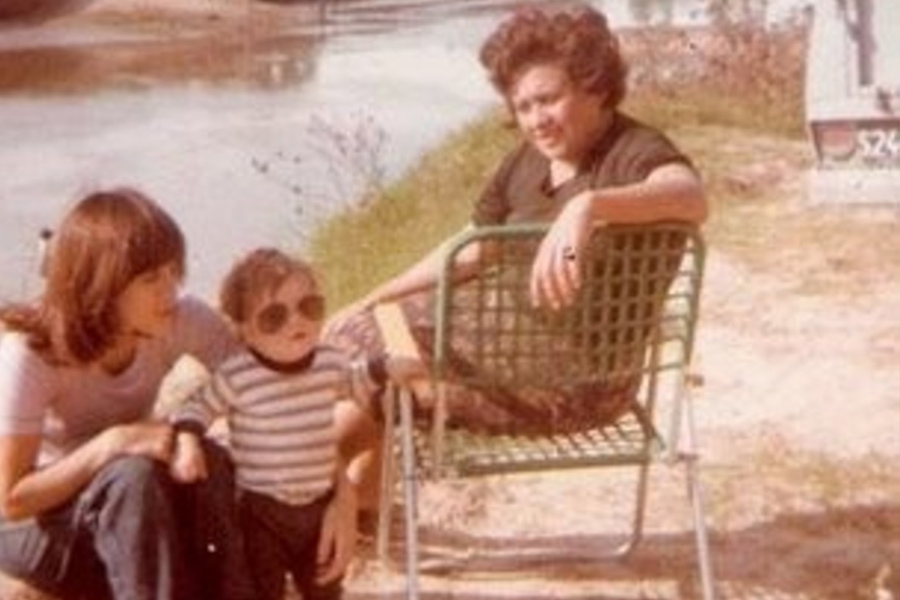
Who Was Celia Oliveira Cuccittini
Celia Oliveira Cuccittini, also known as Celia Olivera Cuccittini, Celia Ramona Olivera Moyano, and Celia Ramona Oliveira, is important to Lionel Messi’s family. Her grandson’s early childhood experiences showed her impact outside her immediate family, despite her private life. She was the grandmother who inspired a little kid to play football before his name was famous.
Celia was born in Santa Fe, Argentina, on May 26, 1930. Family, neighborhood, and community customs molded her upbringing. Her parents were Pedro Manuel Olivera Villanueva and Emília Moyano. As she aged, she joined Rosario’s close-knit community, where her family settled.
Celia never got famous. Her schooling, employment, and income are unknown. Instead, family memories, genealogical data, and her grandson’s love preserve her story. Her story shows me that public recognition doesn’t always measure influence. Some of the greatest legacies start with encouragement.
Early Life and Family Roots in Argentina
Celia was born during Argentina’s social and economic transformation. Her youth was in the early 1900s, before television, worldwide football broadcasts, and social media made sports legends famous.
Many families in Argentina have a mix of European and Argentine origin, like hers. An previous Italian branch of the Cuccittini family lived in Brazil before settling in Rosario. The family history of one of football’s most famous players includes these connections.
Family documents list Oliveira and Olivera as Celia’s surname. Differently recorded or transcribed names might cause such differences between generations and official documents. Ramona and Moyano are sometimes added to her name.
The core of her family story remains consistent despite these changes. She was born in Santa Fe province, raised her family, and became a cherished grandma who encouraged Lionel Messi’s early football career.
Marriage to Antonio Cuccittini Caporissi
On 15 January 1959, Celia married Antonio Cuccittini Caporissi in Firmat, a town in the General López department of Santa Fe province. Antonio, born in 1929, is also referred to as Antonio Domingo Cuccittini in some accounts.
Their marriage marked the beginning of a family chapter that would eventually connect their household to one of the greatest careers in football history. They had one known daughter, Celia María Cuccittini, who later became the mother of Lionel Messi and his siblings.
Celia and Antonio lived through decades of family life in the Rosario area. Their world revolved around ordinary responsibilities, relationships, and the daily experiences of raising the next generation. Although detailed accounts of their marriage remain limited, their place in the family tree is clear.
Antonio survived Celia by almost twenty years. He remained in Rosario until his death in February 2018, following a short illness. His life, like hers, was connected to the family and the neighborhood where Lionel’s passion for football first began.
Celia María Cuccittini and the Next Generation
Celia’s daughter, Celia María Cuccittini, became the mother of Lionel Messi and his three siblings through her marriage to Jorge Horacio Messi. She was born around 1960 in Rosario and raised her children in a working family environment.
Before her son’s sporting success transformed the family’s circumstances, Celia María worked in modest jobs, including employment in a magnet workshop and cleaning work. These experiences reflect the everyday financial realities faced by many families in Argentina. Lionel’s later achievements did not erase the humble beginnings that shaped his childhood.
As a mother, Celia María helped create the family environment in which her children grew up. Her story also demonstrates how a family’s journey can change dramatically across generations. Her mother, Celia Oliveira Cuccittini, belonged to a generation that lived largely outside the public eye, while her grandson would eventually become an internationally recognized sporting figure.
The family members are connected through the following relationships:
| Family member | Relationship to Celia Oliveira Cuccittini |
|---|---|
| Antonio Cuccittini Caporissi | Husband |
| Celia María Cuccittini | Daughter |
| Jorge Horacio Messi | Son in law |
| Rodrigo Messi | Grandson |
| Matías Messi | Grandson |
| Lionel Andrés Messi | Grandson |
| María Sol Messi | Granddaughter |
| Thiago Messi | Great grandson |
| Mateo Messi | Great grandson |
| Ciro Messi | Great grandson |
This family tree reveals the generations through which Celia’s influence continues. Her grandchildren and great grandchildren belong to a much more public era, but the family connections that link them began with the lives of people like her.
How Celia Helped Lionel Messi Begin His Football Journey
Celia’s participation in Lionel Messi’s early football development is a famous story. He loved the game as a young Rosario boy before stadiums yelled his name.
Family memories recall Celia as a devoted fan who often took her grandchildren to football games. She was particularly linked with team Abanderado Grandoli, a southern Rosario team where Lionel began his professional football career.
Lionel was young when a team required a player, according to family legend. His diminutive size first deterred the coach. Celia urged her grandson play, giving him a chance he might have missed.
One way, it was normal. Children join neighborhood teams daily, and grandparents urge them to attempt new things. The story has special relevance because of Lionel’s accomplishments.
This aspect of Celia’s narrative is intriguing because it emphasizes identifying potential before it’s obvious. It was impossible for her to have anticipated that her grandson would win international titles and become a legendary footballer. She just thought he deserved a chance.
Lionel’s success took years of practice, talent, dedication, and support from many individuals, not just her encouragement. Still, Celia’s persistence got him on the pitch early. Sometimes a modest opening starts a bigger adventure.
The Grandmother Behind Messi’s Famous Goal Celebration
Football supporters around the world recognize Lionel Messi’s distinctive goal celebration in which he points both index fingers toward the sky. The gesture is widely understood as a tribute to Celia, whose death left a lasting impression on him during childhood.
Messi has explained that his grandmother was the person who took him to football and that he dedicates goals to her because she cannot be there to witness his achievements. The gesture gives his success a personal dimension that goes beyond statistics, medals, and records.
For spectators, the celebration is brief. For the family, it carries the weight of memory. Each time Messi raises his hands after scoring, he recalls a relationship that began long before the world recognized his extraordinary ability.
The image also reveals something important about the connection between family and sporting identity. A footballer may perform before tens of thousands of people, but the person he remembers most may be someone who supported him when only a handful of neighbors knew his name.
Celia’s legacy is therefore visible in one of football’s most recognizable personal rituals. She is not remembered for trophies she won or records she set, but through a gesture that connects a global sporting career to a grandmother from Rosario.
Celia’s Death and the Lasting Impact on Her Family
Celia Oliveira Cuccittini died in Rosario, Argentina, on 8 May 1998. She was interred in Rosario’s Villa Gobernador Gálvez at 67.
Lionel was ten when mother died weeks before his eleventh birthday on June 24, 1998. Her death occurred during his childhood, when family was still essential and football was becoming more significant.
After losing a close grandparent young, memories might last decades. Messi’s public tributes indicate that the friendship persisted throughout his career. His repeated attention to his aims shows his affection, even though he has not divulged every facet of their connection.
Antonio was Celia’s spouse until February 2018. After her death, he saw his family grow, but Celia never saw Lionel’s international success.
The milestones after her 1998 death stand out. She did not see Messi become a global sensation, win significant club awards, or win the 2022 FIFA World Cup with Argentina. He kept her memory in his story until those defining moments.
The Messi Family and Its Wider Legacy
Celia’s story is inseparable from the wider Messi family. Each family member occupied a different role in Lionel’s upbringing, offering companionship, encouragement, and support as he developed from a child in Rosario into an elite footballer.
Rodrigo Messi, Lionel’s older brother, and Matías Messi, another of his brothers, grew up alongside him. His younger sister, María Sol Messi, completed the group of four siblings born to Celia María Cuccittini and Jorge Horacio Messi.
Their childhood unfolded within a family whose circumstances were relatively modest. Football became a major part of Lionel’s life, but his development also involved the everyday experiences of growing up with siblings, parents, grandparents, and friends.
Celia’s role is especially significant because she belongs to the earliest part of that story. While his parents helped guide his development and his brothers and sister shared his childhood, his grandmother was remembered for her determination to get him involved in the game.
The family’s Italian ancestry adds another dimension to its history. Like many Argentine families, the Messis and Cuccittinis reflect generations of migration, settlement, and cultural adaptation. Their story is rooted in Rosario, a city whose neighborhoods and local football clubs helped nurture a future world champion.
Today, Lionel’s children, Thiago, Mateo, and Ciro, represent another generation of the family. They are Celia’s great grandchildren, extending a family line that began long before their father’s name became known across continents.
What Made Celia Oliveira Cuccittini Special
A few important details define Celia’s public legacy. She encouraged her grandson to play football, supported her family, and connected with her neighborhood. Beyond those memories, her personal life is mostly unknown.
No public career, substantial business enterprise, personal fortune, or independent professional achievement is listed for her. Inflating such elements to complete her biography is misleading.
Her importance can be grasped through her impact on loved ones. Local football fans remembered her as kind, persistent, and popular. Her advocacy for Lionel showed how tangible support may boost a child’s confidence.
Her experience reminds me that influence is often subtle. It could include accompanying a youngster to training, urging a coach to give someone a chance, or believing in a young person when others doubt.
Celia didn’t seek fame for attention. Her grandson kept her memory alive, making her name famous. Her tale is compelling because someone who never forgot what she meant to him introduced the world to her.
Frequently Asked Questions
Who was Celia Oliveira Cuccittini?
Celia Oliveira Cuccittini was the maternal grandmother of Argentine footballer Lionel Messi. She lived primarily in the Rosario area of Santa Fe province and is remembered for supporting her family and encouraging Lionel’s early interest in football.
When and where was Celia Oliveira Cuccittini born?
She was born on 26 May 1930 in Santa Fe, Argentina. Her family later became associated with the Rosario region, where Lionel Messi spent his childhood.
Who was Celia Oliveira Cuccittini married to?
She married Antonio Cuccittini Caporissi on 15 January 1959 in Firmat, Santa Fe province. Antonio was also known as Antonio Domingo Cuccittini in some family records.
How many children did Celia have?
Celia had one known daughter, Celia María Cuccittini, who later married Jorge Horacio Messi. They became the parents of Rodrigo, Matías, Lionel, and María Sol Messi.
How did Celia help Lionel Messi become a footballer?
Family accounts credit Celia with encouraging Lionel to play at Club Abanderado Grandoli in Rosario when a team needed another player. She reportedly insisted that he be given a chance despite initial hesitation about his small size.
Why does Lionel Messi point toward the sky after scoring goals?
Messi’s gesture of pointing both index fingers toward the sky is a tribute to his grandmother Celia. He has explained that she took him to football and that the gesture honors her memory because she cannot be present to see his achievements.
When did Celia Oliveira Cuccittini die?
Celia died on 8 May 1998 in Rosario, Argentina, at the age of 67. She was buried in Villa Gobernador Gálvez, in the Rosario area.
Did Celia live long enough to see Lionel Messi become famous?
No. She died in 1998, when Lionel was ten years old. She did not live to see his professional career, his international success, or Argentina’s 2022 World Cup victory.
Who was Celia’s husband, Antonio Cuccittini Caporissi?
Antonio was Celia’s husband and the maternal grandfather of Lionel Messi. He remained in the Rosario area after Celia’s death and died in February 2018 following a short illness.
What were Celia Oliveira Cuccittini’s career and financial achievements?
There is no reliable public record establishing a formal professional career, business activities, personal fortune, or independent public achievements for Celia. Her best known legacy comes from her family relationships and her encouragement of Lionel’s early football development.
Was Celia Oliveira Cuccittini a public figure?
No. Celia lived a largely private life and did not maintain an independent public profile. Most accounts of her life focus on her family, her connection to Rosario, and her lasting place in Lionel Messi’s personal story.
What is Celia Oliveira Cuccittini’s lasting legacy?
Her lasting legacy is the affection with which Lionel Messi remembers her and the role she played in his early football experiences. Through his goal celebrations and recollections, her influence remains part of the story of a boy from Rosario who went on to become one of the world’s most celebrated footballers.